
Article: How Botanical Illustration Shaped My Artistic Journey
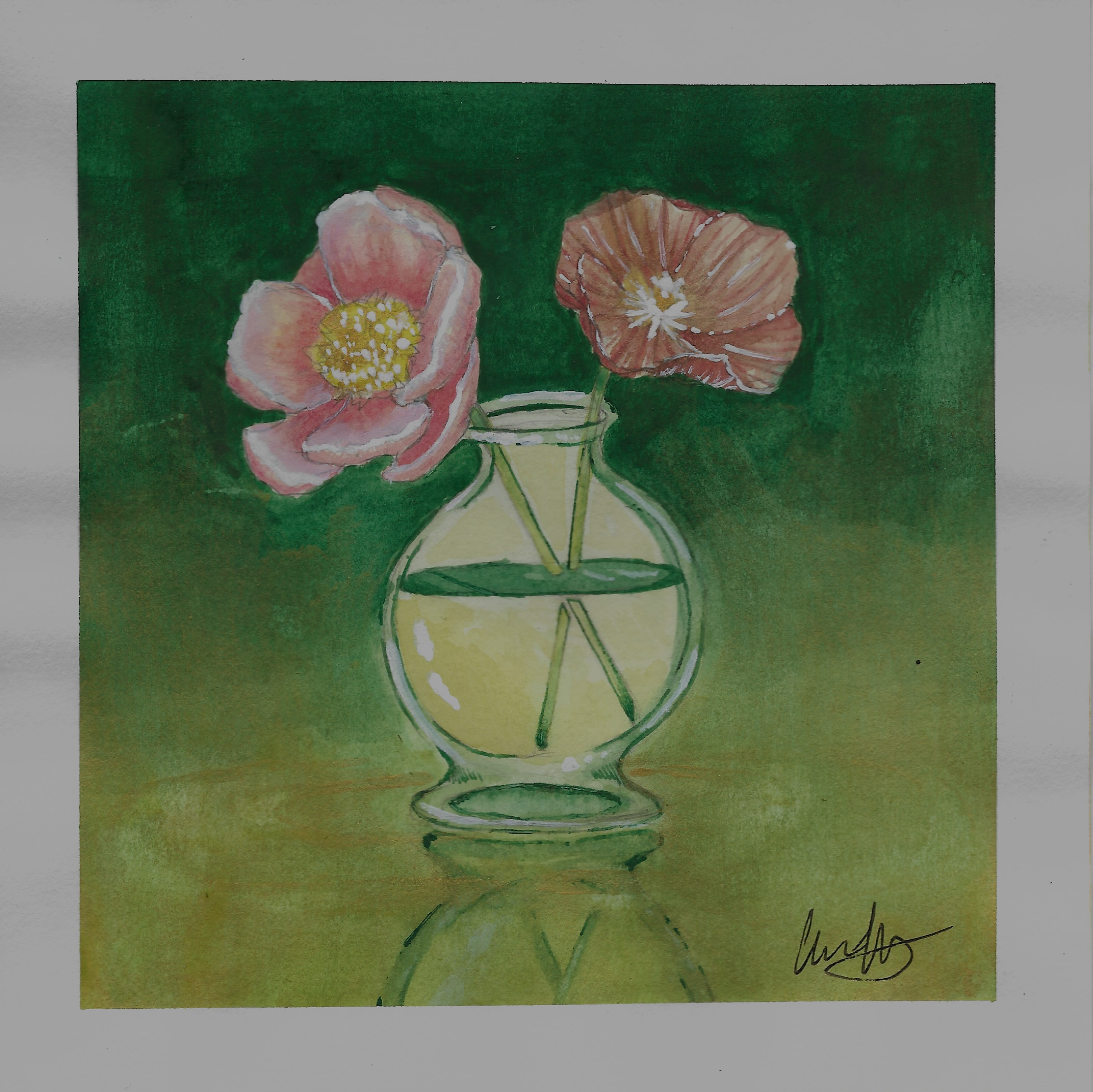
How Botanical Illustration Shaped My Artistic Journey
Over the years, I have taken many classes and explored a wide range of artistic disciplines, from oil painting to comic books. Along the way, I achieved several milestones in my art career, including an Associate’s degree in Fine Art and a Bachelor’s degree in Communication Arts. These experiences led to side projects such as logo design, personal commissions, and eventually the start of my own business.
During my Communication Arts program, course options were highly restricted, particularly when it came to electives. It was through these limitations that I unexpectedly discovered Botanical Illustration~something I had no idea would become such a defining part of my artistic journey.
Since my husband and I have been together, I have learned so much about botanicals, from holistic medicine to the quiet beauty of flowers. What began as shared curiosity slowly grew into a life-long passion. I have always loved noticing the small details in life, and gardening perfectly embodies that philosophy. Our garden, affectionately called our “love garden”, is filled with a wide variety of plants, from medicinal herbs to purely ornamental blooms. Having a garden is truly a blessing, and I am deeply grateful not only to grow plants, but to have an endless source of living reference material for my artwork.
When I enrolled in Botanical Illustration, I assumed I would simply be painting and drawing beautiful plants. While that was certainly part of it, I had no idea how much depth the course required. The research component alone was extensive: plant hardiness zones, endemic species, pollinators, climate preferences, soil types, natural defense mechanisms, and complex symbiotic, parasitic, and host relationships. This level of study completely changed the way I viewed nature. I began to understand just how intricate and interconnected every living organism truly is.
The projects were process-heavy and extremely time-consuming. Balancing a full-time job alongside a full course load, I often found myself thinking, How am I ever going to finish this? This was supposed to be a fun class! Fortunately, my existing love for flora and fauna was reignited through the assignments and carried me through even the most demanding moments.
Class Projects
Feel free to use these as inspiration or as study exercises to deepen your own exploration of botanical illustration.
Pollinator Project
Flora: American Bladdernut (Staphylea trifolia)
Fauna: Bald-faced Hornet (Dolichovespula maculata)
This project explored the relationship between the American Bladdernut tree and the bald-faced hornet, focusing on a form of “accidental pollination.” These hornets land on flowers primarily to hunt other insects, unintentionally transferring pollen in the process. I documented the plant’s life cycle from flowering to seed production and illustrated the reproductive structures of the flower to demonstrate how pollination ensures the continuation of the species.

Educational Magazine Spread
Flora: Nagaimo / Japanese Mountain Yam (Dioscorea polystachya)
This was one of my favorite assignments. We were asked to choose an edible plant and create an educational magazine spread highlighting its health benefits or unique characteristics. Living in a Taiwanese household, I wanted to represent ingredients we commonly use and share them with my classmates.
Nagaimo is particularly fascinating: slimy when eaten raw, yet light and potato-like when cooked. I brought raw samples to class for everyone to try, and the reactions were priceless~some people were repelled by the texture, others intrigued, and a few refused outright. It was incredibly rewarding to introduce something unfamiliar and, in turn, experience new foods brought in by my classmates.
Through my research, I learned that nagaimo is considered a medicinal plant, believed to help lower cholesterol and boost immune health. It is also a popular vegan egg substitute when ground into a paste, as it adds structure without overpowering flavor. Its versatility and unexpected uses were a perfect reminder of how extraordinary a single plant can be.

Inventions
Flora:
-
Eucalyptus macrocarpa — Endemic to southwestern Western Australia
-
Green Bird Flower (Crotalaria cunninghamii) — Native to arid and semi-arid regions of northern Australia
-
Poppy Seed Pod (Papaver somniferum) — Native to the eastern Mediterranean, southern Europe, and northern Africa
This assignment required us to select three plants and design inventions inspired by their natural forms. It involved extensive research, problem-solving, and creative risk-taking. I eventually designed three concepts: a house, an ear cuff, and a whisk.
The house was inspired by the eucalyptus flower pod and featured a circular, two-story structure with built-in window planters with plants mimicking petals, topped with a whimsical, pod-shaped roof. Unfortunately, it was interpreted more as architecture than an invention...lesson learned.


The ear cuff, inspired by the Green Bird Flower, echoed the shape of an elf’s ear. I envisioned an ornate, wood-textured accessory that balanced comfort with fantasy aesthetics. Looking back, I can see where I struggled to articulate the concept clearly, and it was not particularly well received. Out of the three designs it does not resemble the actual plant itself.


The whisk, inspired by the skeletal structure of a dried poppy seed pod, became my favorite. After exploring ideas like a birdcage, parasol, and purse, I chose to design something I would personally use. The final design featured a clear green acrylic handle to mimic the stem, the pod’s delicate structure for whisking, and a poppy-red bowl scraper to ensure no batter went to waste.
I was incredibly proud of this piece and selected it as my “all-star.” While my professor initially criticized it for being too simple, I stood by my design and defended its functionality and inspiration. Eventually, I managed to sway her opinion just enough to protect my grade~ an experience that taught me the importance of trusting my creative instincts.


Seasons and Leaf Colors
Flora: Red Maple (Acer rubrum)
This was a semester-long project that followed the transformation of a single leaf through the seasons. We began in late summer with green leaves, documenting and pressing specimens for reference. As temperatures cooled, the leaves shifted to yellow-green, then toasted orange, and finally the deep reds of late fall and early winter.
This project taught me patience, timing, and the importance of close observation. It also marked the beginning of my journey with watercolor painting. I had always avoided watercolors due to my impatience, but botanical illustration requires them as a standard medium. Through this process, I learned to build layers slowly, develop depth, and truly honor the details of my subject. Watercolor soon became one of my favorite mediums and remains central to my work today.

Field Sketches
Flora: Various native species
Field sketching allowed me to venture outdoors in search of overlooked beauty—tiny weeds pushing through pavement cracks, shade-giving trees, and vines climbing building walls. The challenge increased as we were limited to native species, eliminating houseplants as subjects, and winter made specimens harder to find.
Despite these limitations, I gathered a meaningful collection of studies and discovered how rewarding it is to document plants in their natural environments. I highly recommend this practice to anyone who enjoys hiking or traveling! It turns every journey into an opportunity for discovery.


After graduating, I can confidently say that Botanical Illustration is the most impactful discipline I carried forward in my artistic journey. It deepened my love for watercolors, strengthened my connection to plants, and taught me to appreciate the small, often unseen details of life. These skills now inform my mixed-media work, and organic Art Nouveau inspired illustrations, allowing me to infuse my art, and my life with joy and intention.
Some of my more recent work!


If you feel even a fraction of passion for botanicals, I highly recommend taking a class or diving into independent study. Research deeply. Study layering, color, composition, and life itself. Bring it all together~whether through realism, abstraction, or experimentation.
Find your inner flora, and let it grow beyond your wildest dreams.
Thank you for spending time with me on my botanical journey~ I hope it inspires you to begin your own!
May your path bloom generously, with far more roses than thorns.
Christopher Foster

Leave a comment
This site is protected by hCaptcha and the hCaptcha Privacy Policy and Terms of Service apply.